Commercial Solar Installation Services: A 2026 Business Guide
Factory owners and warehouse managers across Pakistan share one complaint in 2026: the power bill arrives before the profit does. Diesel backup eats margins, grid tariffs keep rising, and every unplanned outage stalls production. This is exactly why professional solar installation services have shifted from a nice-to-have into a core piece of industrial infrastructure planning.
This guide is written for businesses, not households. We will look at how commercial rooftop solar is scoped, what a serious installation partner should deliver, and how to read the numbers so your boardroom sees payback rather than guesswork.
Why Commercial Solar Installation Services Differ From Home Solar
A 5 kW home system and a 300 kW warehouse array are not the same project scaled up. They are fundamentally different disciplines. The loads are three-phase, the roofs are vast, and the stakes of downtime are measured in production shifts, not ceiling fans.
Commercial projects demand structural surveys, shadow analysis across large spans, and coordination with existing machinery. That is why the quality of your installation partner matters far more at this scale than the brand sticker on the panel.
The infrastructure mindset
Think of solar the way a logistics firm thinks about a new facility. You would never let an inexperienced crew pour the slab of a distribution centre, and the same logic applies on the roof. A warehouse operator sourcing racking or cold chain equipment relies on an experienced local team, and solar deserves identical scrutiny.
What a Complete Installation Service Should Include
Many vendors sell hardware and call it a day. A genuine end-to-end service covers the whole lifecycle. Here is what you should expect on the scope of work.
- Site audit: roof load capacity, orientation, and shading survey.
- Energy modelling: matching generation to your actual daytime consumption curve.
- System design: array layout, string sizing, and inverter selection.
- Procurement: sourcing tier-one solar panels in Pakistan with real warranties.
- Net-metering paperwork: handling DISCO and regulatory approvals.
- Commissioning & monitoring: testing, handover, and remote performance tracking.
- O&M contract: scheduled cleaning and fault response.
The parts buyers forget to ask about
Operations and maintenance is where cheap bids quietly cut corners. A dusty array in Faisalabad can lose a double-digit percentage of output within weeks. Ask any installer how cleaning and monitoring are handled before you sign, not after.
How Much Can a Business Actually Save?
This is the question the finance team really wants answered. Savings depend on system size, your tariff slab, and how much energy you consume during daylight hours. The illustrative table below shows typical 2026 ranges for grid-tied commercial systems.
| System Size | Approx. Roof Area | Est. Daily Units | Typical Payback |
|---|---|---|---|
| 25 kW | 1,800 sq ft | 100–110 units | 3–4 years |
| 50 kW | 3,500 sq ft | 200–220 units | 3–4 years |
| 100 kW | 7,000 sq ft | 400–440 units | 2.5–3.5 years |
| 250 kW | 17,000 sq ft | 1,000+ units | 2.5–3 years |
These figures assume strong daytime self-consumption, which is where factories and warehouses have a natural advantage over homes. Your machines run while the sun shines, so most generation is used on site rather than exported cheaply.
Choosing the Right Installation Partner: A Checklist
Use this sequence when you shortlist vendors. It separates genuine engineering firms from box-shifters.
- Review completed commercial projects of similar size, ideally in your city.
- Confirm structural and electrical engineers are on staff, not subcontracted blindly.
- Demand a bankable energy yield report rather than a vague savings promise.
- Check warranty handling — who services a failed inverter in year four?
- Ask about net-metering track record with your specific distribution company.
- Read the O&M terms for response times and cleaning frequency.
Compliance and incentives in 2026
Net metering for commercial users is governed nationally, and policy frameworks are published by the Alternative Energy Development Board. Global cost and capacity benchmarks tracked by the International Renewable Energy Agency confirm that solar remains among the cheapest new generation sources, which is why industrial adoption keeps accelerating.
Hybrid Power and Backup: Beyond the Grid-Tied Basics
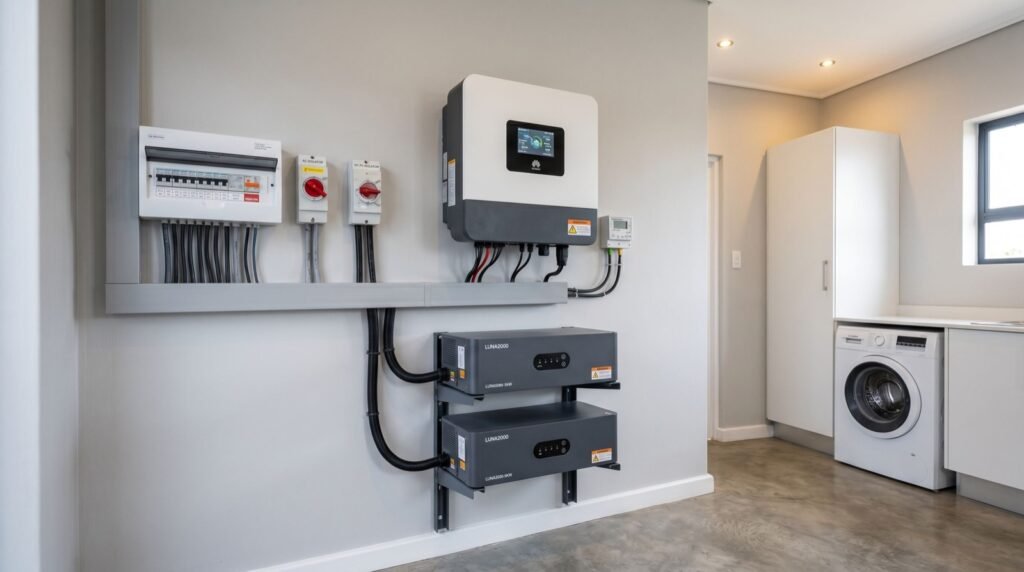
Many industrial buyers ask the same follow-up: what happens when the grid drops at 2 p.m. during peak production? A pure grid-tied system shuts down for safety during an outage, which is why more Pakistani factories now specify hybrid inverters with battery or generator synchronisation.
Hybrid designs let critical loads ride through outages while still exporting surplus the rest of the day. The trade-off is cost: batteries remain the most expensive line item in 2026, so engineers usually size them to cover only essential machinery rather than the whole plant.
A real-world scoping example
On one 80 kW textile-unit project we reviewed, the owner initially wanted full battery backup. A careful load audit showed that only the dyeing line and control room truly needed uninterrupted power. Backing up just those circuits cut the battery budget by more than half while still protecting the processes that mattered. That is the kind of judgement a generic quote never captures.
The lesson is simple: let consumption data, not fear of outages, drive the backup decision. A good installer models your actual daytime and shift-based demand before recommending a single kilowatt-hour of storage.
Phasing a larger rollout
Businesses rarely need to solar-enable an entire campus at once. A phased approach keeps capital under control:
- Phase one: cover the roof above your highest daytime load first for the fastest payback.
- Phase two: extend to secondary buildings once savings are proven.
- Phase three: add storage or expand capacity as tariffs and needs evolve.
Designing phase one with future expansion in mind, such as oversizing cable trays and switchgear, saves significant rework later.
Frequently Asked Questions
How long do professional solar installation services take for a commercial site?
A typical 50–100 kW rooftop runs four to eight weeks from survey to commissioning, with net-metering approval often the longest single step. Larger plants or complex roofs extend that timeline.
Will solar fully replace our grid or generator supply?
Grid-tied systems offset daytime consumption and slash bills, but most businesses keep a grid connection or battery backup for nights and cloudy spells. A hybrid design can reduce generator hours dramatically.
Does commercial solar need a lot of maintenance?
Panels have no moving parts, so maintenance is light but not zero. Scheduled cleaning and annual electrical checks keep output high; neglecting cleaning in dusty regions is the biggest avoidable loss.
Is our roof strong enough for a large array?
That is precisely what the structural survey determines. Reputable installers assess load capacity before quoting, and ballasted or lightweight mounting options exist for roofs that cannot take heavy fixings.
Conclusion: Treat Solar as Infrastructure
For Pakistani businesses in 2026, rooftop solar is no longer an experiment; it is one of the fastest-paying infrastructure upgrades available. The difference between a project that delivers and one that disappoints comes down to the installation partner you choose and the rigour of their engineering.
Scope the work properly, demand a real yield report, and prioritise long-term solar installation services over the cheapest headline price. If your power bills have become a boardroom problem, book a commercial site audit and let qualified engineers turn your empty roof into a measurable return.